
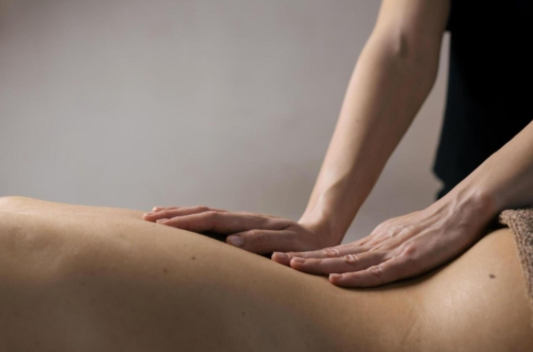
Back pain is one of the most common reasons women seek therapeutic massage — and one of the conditions where the right approach makes the most meaningful difference. It is also one of the areas where generic, one-size-fits-all treatment most consistently falls short. Back pain in women has specific patterns, specific contributing factors, and specific physiological contexts that differ from the male experience of back pain in ways that matter therapeutically.
Deep tissue massage for back pain, when delivered by a female therapist who understands both the anatomy and the lived context of women’s back pain, can produce significant and lasting relief. Not just temporary easing of surface tension, but genuine change in the deeper muscular and fascial structures where chronic pain actually lives.
At Arch Massage in Wollert, every session is delivered in a women-only studio by a female therapist. The studio exists entirely for women, and our treatment approach is designed around the specific needs of female bodies at every life stage.
Why Back Pain in Women Is Different
Understanding back pain in women requires acknowledging the specific physiological and hormonal factors that affect the female musculoskeletal system across the lifespan and that are not present in men.
Hormonal fluctuations across the menstrual cycle directly affect ligament laxity and pain sensitivity. In the days before menstruation, progesterone levels drop and prostaglandin levels rise — increasing systemic inflammation and lowering pain threshold. Women managing pre-existing back conditions frequently notice a predictable worsening of symptoms at this time that has a clear hormonal basis, not a structural one.
Pregnancy creates profound postural and structural changes. The forward shift of the centre of gravity as the uterus grows, the pelvic tilt adaptation, the increased lumbar lordosis, and the hormonal softening of the sacroiliac joints all contribute to back pain patterns that are unique to the pregnant and postnatal body.
In scenarios after a caesarean section, the scar tissue that forms in the anterior abdominal wall creates a pull that directly affects thoracolumbar mechanics — a contributing factor to back pain that is frequently overlooked.
Menopause and the years that follow bring changes in bone density, reduced oestrogen-dependent tissue resilience, and shifts in fat distribution that change postural loading. These factors mean that the back pain a woman experiences at fifty-five may be physiologically very different from what she experienced at thirty-five, even if it presents in a similar location.
A skilled therapist working in the area of women’s back massage accounts for all of this, not as background information, but as clinically relevant context that shapes treatment decisions.
What Deep Tissue Massage for Back Pain Involves
Deep tissue massage for back pain works by targeting the deeper layers of muscle and connective tissue where chronic tension, adhesion, and restriction typically reside. These are the structures that surface-level relaxation massage does not reach and they are often where the actual source of persistent back pain is located.
The specific muscles addressed depend entirely on the presentation. For lower back pain, the focus is typically on the quadratus lumborum, the deep erector spinae, the multifidus, the iliopsoas and the hip flexor complex, the piriformis, and the gluteal muscles. All of which can generate or contribute to lower back pain through direct tension or through referred patterns.
For mid and upper back pain, the rhomboids, the mid and lower trapezius, the serratus posterior, and the rotator cuff muscles are commonly involved, along with the fascial restrictions of the thoracolumbar fascia. The technique involves slow, deliberate pressure applied through the belly of the muscle and across fascial planes, building depth gradually as the tissue responds, never forcing through resistance.
A well-delivered deep tissue massage for a back pain session should produce a feeling of progressive release and relief, not of discomfort or bracing. The tissue needs to be allowed to respond at its own pace.
At Arch Massage, sessions for back pain typically run 60 to 90 minutes. The longer format is usually more appropriate for back conditions, because adequate time is required to address not just the primary site of pain but the contributing structures in the hips, glutes, and thoracic spine that are almost always involved.
Clients across Epping and the surrounding northern suburbs routinely book the extended format for this reason.
Pressure Point Massage for Back Pain

Pressure point massage is a valuable and often highly effective tool in the treatment of back pain, particularly pain that has a referred quality, or that is driven by myofascial trigger points rather than purely structural restriction.
Trigger points are hypersensitive spots within the muscle belly i.e. areas of sustained local contraction that generate a predictable pattern of referred pain to sites elsewhere in the body. A trigger point in the gluteus medius, for example, reliably refers pain into the lower back and lateral hip. A trigger point in the piriformis can generate pain that travels down the back of the leg in a pattern that closely mimics sciatica. A trigger point in the iliopsoas often refers pain into the anterior hip and lower lumbar region.
Understanding the trigger point referral map and knowing how to locate and treat these points is a distinct clinical skill. Pressure point massage applied to myofascial trigger points uses sustained, progressive pressure, held through the release cycle of the trigger point to achieve deactivation and restore normal muscle function.
The pressure is calibrated in a planned manner: enough to engage the trigger point and promote release, not so much that it creates a guarding response that reverses the effect. For women managing back pain with a significant trigger point component, this technique can produce immediate and significant relief that generalised massage cannot.
Massaging Scar Tissue That Contributes to Back Pain
For women who have had abdominal surgery: caesarean section, hysterectomy, appendectomy, laparoscopic procedures, massaging scar tissue is an important and frequently overlooked dimension of back pain treatment.
Scar tissue forms as a necessary part of the healing process following any surgical incision, but it does not behave like the tissue it replaces. It is less elastic, more adhered to surrounding structures, and it matures over time in a direction determined partly by the mechanics of the body around it.
An anterior abdominal scar that becomes adherent to the underlying fascia creates an anterior pull on the thoracolumbar fascia, which connects the front and back of the trunk and this pull directly affects posterior structures, contributing to lower back tightness, restricted lumbar extension, and chronic pain.
Massaging scar tissue in the context of back pain treatment is not about cosmetic improvement of the scar’s appearance. It is about restoring the mobility of the tissue and breaking down adhesions that are mechanically contributing to the back pain presentation.
When done correctly and at the appropriate stage of healing, not in the acute phase, but once the scar has fully closed, typically eight to twelve weeks post-surgery with medical clearance. The scar tissue work can be one of the most significant interventions available for postoperative back pain.
At Arch Massage, we take a full surgical and medical history before treating any area with a surgical background. The process of massaging scar tissue is work that requires clinical judgement and sensitivity, and we approach it accordingly.
Why Women Back Massage in a Women-Only Space Matters
Back pain treatment typically involves significant physical exposure — the back, glutes, and hip region require direct access, and for many women, this is an area of particular physical and emotional sensitivity. This kind of treatment in a mixed-gender environment, by a male therapist, creates a background tension that many women manage without naming it, and that directly undermines the therapeutic benefit of the session.
Arch Massage is entirely women-only. No male therapists, no male clients, no shared spaces. For women who have spent time quietly managing their comfort in environments that were not designed around their needs, arriving at Arch can feel like a genuinely different experience from the very first moment.
When the environment itself is safe, not just acceptable, but genuinely safe and the body can receive treatment in a way that simply is not possible otherwise. This is especially relevant for women back massage in clients who carry a history of difficult physical experiences, medical trauma, or simply the accumulated discomfort of years in environments that did not feel entirely theirs.
Our women-only model is a therapeutic decision, not a marketing one.
What to Expect After a Deep Tissue Session
After deep tissue massage for back pain, particularly a first session or a session working into previously untreated areas, some tenderness in the treated muscles is normal and expected. This is a healthy response to the mechanical work done in the tissue and typically resolves within 24 to 48 hours, after which most clients notice a distinct reduction in the original pain and restriction that brought them in.

Staying well hydrated after the session supports the body in clearing the metabolic by-products released during deep tissue work. Light, gentle movement — walking, easy stretching — is beneficial. Intense exercise immediately post-session is best avoided. For some clients, adding cupping therapy to subsequent sessions can help address the deeper fascial restrictions that compound chronic back pain.
For chronic back conditions, a planned course of regular sessions typically produces substantially better results than a single treatment. The chronic holding patterns that generate persistent back pain have often been in place for years or decades; they do not fully resolve in a single session.
We discuss an appropriate treatment plan with every client at their first appointment.
Book Your Back Pain Session
If you are living with persistent back pain, Arch Massage offers expert, women-focused therapeutic treatment in Wollert. Our female therapists combine deep tissue work, pressure point release, and where clinically appropriate: scar tissue and cupping techniques to address not just the site of pain but the contributing structures throughout the hips, glutes, and thoracic spine.
Every session begins with a detailed intake of your medical and surgical history so the treatment is built around your specific presentation, and we recommend an initial treatment plan at your first appointment so progress can be measured across sessions.
To book, visit archmassage.com or call us on 61 493 465 015. We welcome clients from across Melbourne’s northern suburbs.